

Training – planning (English)
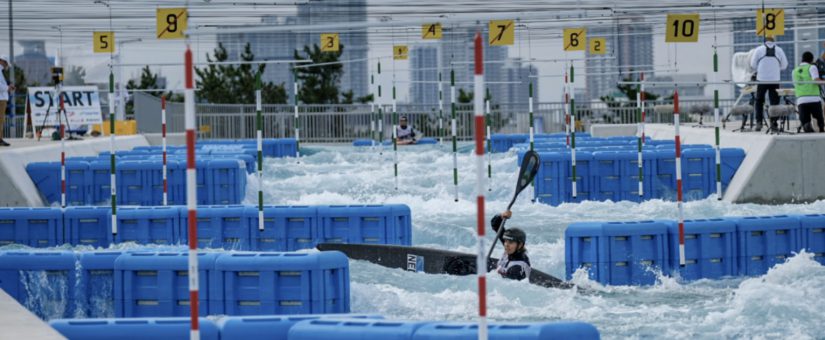
Four years ago I was exploring the world, paddling rivers far away from artificial whitewater courses of canoe slalom. This September I have created what I thought was impossible by qualifying for the 2020 Olympic Games in Tokyo!
My paddling expeditions have provide me the opportunity to witness and enjoy the most beautiful rivers, places and people on the planet and I am stoked with every single moment of it and cherish a million of unforgettable memories!

Changing to the realm of canoe slalom I had to start as a beginner. I’m extremely stoked that my hard work is paying off and that I have the opportunity to represent the Netherlands at the Olympic Games, especially coming from a total different background and taking a total different path than most of the slalom Olympic representatives.

For four year I had no coach and no idea. I was often just paddling by myself having fun on the river. Since this year I have been backed up by the dutch canoe and Olympic federation, which allowed me to recruit a coach. Having a coach on the bank has been a game changer but it also has made me proud of how far I got and my achievements prior to this.

To become a canoe slalom paddler I had to shift my lifestyle. An elite canoe athlete has to put in thousands of hours of training on different whitewater courses, practising thousands of different gate combinations. There are so many skills to learn and drills to repeat.
Last year I wrote a series of blog post about different aspects of training on the Palm Equipment website. Having some more insides each year on these topics, I will go a bit deeper into them with some more specifics. This first write up is about how to plan your training.
Planning training – ‘Failing to plan, is planning to fail’
As the winter sun begins to set ever earlier and the end of another season is upon us, it’s time to plan for the next. The purpose of a Training Plan is to identify the work to be carried out to achieve personal objectives. Training plans are the strategies for achieving peak performances. More than simply building strength or endurance, effective programs are created based on sport-specific demands & sound principles. A training plan helps you target a race, but also helps you to stay motivated to regularly work-out.

I recommend being flexible in order to alleviate anxiety, and also being realistic about how much training you will be able to fit into your everyday life. Devising a training plan which is realistic and personal rather than using one taken off the internet or followed by a friend. You need to schedule when you have the time to train around your current commitments, so training stays a pleasure and not a chore.
Where to start?
Start with the date of your most important competitions or perhaps your biggest expedition of the year where you want to be top fit (Indus, Stikine or a first D mission!), and work your way back to the present.
Periodisation is the method of organising the training year into phases where each phase has its specific aims for development of your athlete skills. Organise a long-term plan that includes training phases (for example, conditioning, intensive work, in-season), and get specific with the types of training activities
The easiest is to make a year calendar with a rough overview of all the races/ expeditions/ river trips/ teaching, etc you want to attend and when you want to be on your peak performance. I have attached an example. You can colour coordinate the different training phases eg. Race tapering, building block, recovery etc. (The example is quite plain, ideally you will have the whole year planned out) .
It might seems a little over the top or overwhelming for you, but writing it down and structure it will make it lots easier to stay focus and committed!

One you have your year overview the next step is to break it down into smaller goals, your phases and write down the aim of the training block eg. Aerobic work, Strength building, Race preparation etc. Then you can write down a day by day break down of the sessions you want to do. You can fill in the intensity of your weeks to keep an overview in the long term. A nice format is 3 hard weeks of training and 1 easy week where you can properly recover and re-set again for another great 3 week block of intense training. Important is to also write down your objectives, so you know what you want to work on and be focused on.
A good way to break down your week training is to think about what your most important session of the week is and work around this. So you have done a bit of work before but not coming into it too tired. It’s also better to separate gym and aerobic trainings on different days or at least have more than 6 hours between them.
If you want to build up earobic fitness and strength, you could look into longer sessions. ie. 10 x 5 minute loops. Flatwater aerobics pyramids 60% [ 5′ /6′ /7′ /8′ /9′ /8′ /7′ /6′ /5′ min (1 min rest between each x minute effort). In the gym you can look into more reps to burn down the muscles and slowly transfer into less reps and max strength.
Closer to races or perhaps expedition you can start training shorter efforts. 1on/ 1 off max effort! To get dynamic and fast! In the gym you can start doing power circuits to be explosive on the water.

If you try to do too much, you’ll become stressed about fitting it in. And if you feel you have to stick rigidly to a plan that’s not compatible with your commitments, you’ll worry when life gets in the way of training. Being flexible and realistic will mean you stay happy, content and motivated. Also don’t be just focused on your goal, make sure you focus on the process and enjoy the journey!
0 Comments